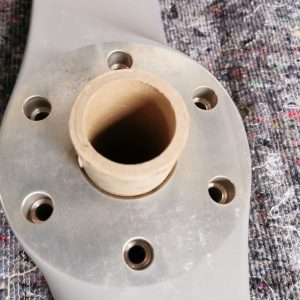
New, Never Installed may support a restoration, new aircraft build, engine installation, maintenance project, spare inventory requirement, or replacement-propeller search.
A Sensenich Propeller P/N 74DM6-0-60 may also be advertised as a Sensenich 74DM6 Propeller or 74DM6-0-60 Aircraft Propeller when every model character, suffix, serial marking, and alteration detail is stated accurately.
These related phrases connect the product with buyers seeking a durable and comparatively straightforward general aviation propeller design.
A 74-Inch Aircraft Propeller and 60-Inch Pitch Propeller should be confirmed through manufacturer markings, approved data, and suitable measurement rather than model interpretation alone.
A Two-Blade Aircraft Propeller should be treated as one matched rotating assembly, while a Sensenich Aircraft Propeller should be identified through verified manufacturer markings.
Confirming the Exact Aircraft Propeller
Complete identification reduces unsuitable purchases and gives maintenance professionals the information required for further review.
Reliable traceability improves the commercial and maintenance value of the Sensenich 74DM6 Propeller.
Verifying Condition Before Installation
An unused propeller may still develop coating damage, corrosion, moisture exposure, scratches, dents, contamination, or packaging-related abrasion.
Any temporary mounting or dimensional checking should be disclosed clearly.
How a Fixed-Pitch Aluminum Propeller Operates
A fixed-pitch propeller uses blade geometry manufactured or adjusted for a defined range of engine and aircraft operating conditions.
Professional verification supports responsible use of the Sensenich Fixed-Pitch Propeller.
Inspecting the Sensenich Aluminum Propeller
Professional inspection helps preserve the long-term value of the Sensenich Aluminum Propeller.
Responsible care supports the condition of the Aluminum Aircraft Propeller.
Avoiding Unverified Propeller Size Claims
Any authorized diameter reduction should appear in the propeller markings and maintenance records.
Diameter should be measured using an appropriate hub-center reference and complete tip-to-tip procedure.
Comparing Pitch Between Both Blades
The seller should not guarantee specific performance based only on the pitch designation.
A blade-to-blade pitch difference can contribute to vibration, reduced efficiency, and unequal aerodynamic loading.
Verifying Aircraft and Engine Applications
Compatibility depends on the exact aircraft model, serial range, engine designation, propeller approval, hub, bolt pattern, diameter, pitch, and operating limitations.
The engine and propeller combination must remain within applicable RPM and power limitations.
Protecting the Matched Two-Blade Design
A Two-Blade Aircraft Propeller should be evaluated as a complete matched assembly rather than as two independent blade components.
Storage supports should protect both blades without applying uneven pressure.
Evaluating Mounting Holes and Surfaces
The propeller hub should match the receiving engine flange, pilot diameter, bolt pattern, approved spacer arrangement, spinner components, and required installation hardware.
Fasteners should not be selected solely by visual appearance, basic diameter, or thread size.
Evaluating Scratches, Dents, and Finish Damage
The depth, location, orientation, and extent of any defect affect the appropriate inspection or corrective action.
Trailing edges and blade tips should remain free from bending, cracking, deformation, edge damage, and inconsistent contour.
Preserving an Unused Aircraft Propeller
Complete corrosion evaluation supports responsible purchasing.
The factory finish should remain protected from abrasive materials, harsh cleaners, adhesives, chemical vapors, and trapped moisture.
Certified Aircraft Propeller Status
Certified design status does not automatically establish the present serviceability, airworthiness, or installation eligibility of an individual propeller.
Installation eligibility depends on the exact aircraft, engine, configuration, approved data, and applicable maintenance requirements.
Propeller Traceability and Documentation
The manufacturer data plate should remain legible, securely attached, and consistent with the physical propeller, invoice, packaging, and supplied documents.
Paperwork should not be interpreted beyond its actual scope or current relevance.
Pre-Purchase Inspection Checklist
The buyer should obtain enough information for a qualified propeller specialist or aviation mechanic to review the component.
- Resolve identity, applicability, dimensions, condition, and package-completeness questions before payment.
- Do not treat original packaging, clean paint, new wording, or never-installed status as proof of present serviceability.
- Retain photographs, serial information, measurements, purchase records, inspection reports, release documents, and freight paperwork with the aircraft project file.
Protecting a New Two-Blade Propeller in Transit
Blade tips, leading edges, trailing edges, mounting surfaces, bolt holes, identification plates, and factory coatings require suitable protection.
The shipping crate should identify appropriate lifting and handling points so carriers do not use the propeller blades as handles.
Long-Term Aluminum Propeller Storage
The propeller should not be placed where tools, vehicles, machinery, or personnel can strike it.
Periodic inspection can identify developing corrosion, packaging damage, coating defects, or mishandling.
Completing the Propeller and Spinner Assembly
The technician should verify the complete model, serial number, diameter, pitch, hub, flange, bolt pattern, spacer arrangement, mounting hardware, torque procedure, and installation eligibility.
Spinner components should maintain suitable alignment, attachment, and clearance without causing stress or imbalance.
After installation, technicians should verify security, propeller clearance, blade tracking, spinner alignment, hardware condition, and surrounding aircraft components before starting the engine.
Caring for the Fixed-Pitch Aluminum Propeller
Routine here maintenance should include inspection of blade faces, backs, leading edges, trailing edges, tips, hub, mounting hardware, spinner components, blade tracking, finish, and signs of corrosion or movement.
The propeller should receive additional inspection after a suspected strike, sudden engine stoppage, overspeed, severe vibration, loose installation, lightning-related concern, or transportation impact.
Commercial Value of a New Sensenich Propeller
Honest information strengthens buyer confidence and reduces disputes.
The lowest advertised price may not represent the lowest installed cost when hardware, records, or compatibility information are incomplete.
Final Thoughts on the Sensenich 74DM6 Propeller
When thoroughly evaluated, documented, packaged, installed, and maintained, the Sensenich Propeller – P/N 74DM6-0-60
Careful technical and commercial review can reduce compatibility problems, missing-hardware expenses, storage-related concerns, installation delays, inspection costs, and documentation issues.
Whether the requirement is a Sensenich Propeller P/N 74DM6-0-60, Sensenich 74DM6 Propeller, or 74DM6-0-60 Aircraft Propeller, exact identification should guide the purchase.
With complete evaluation and continued care, the Sensenich Propeller – P/N 74DM6-0-60